The Lost Art of Play
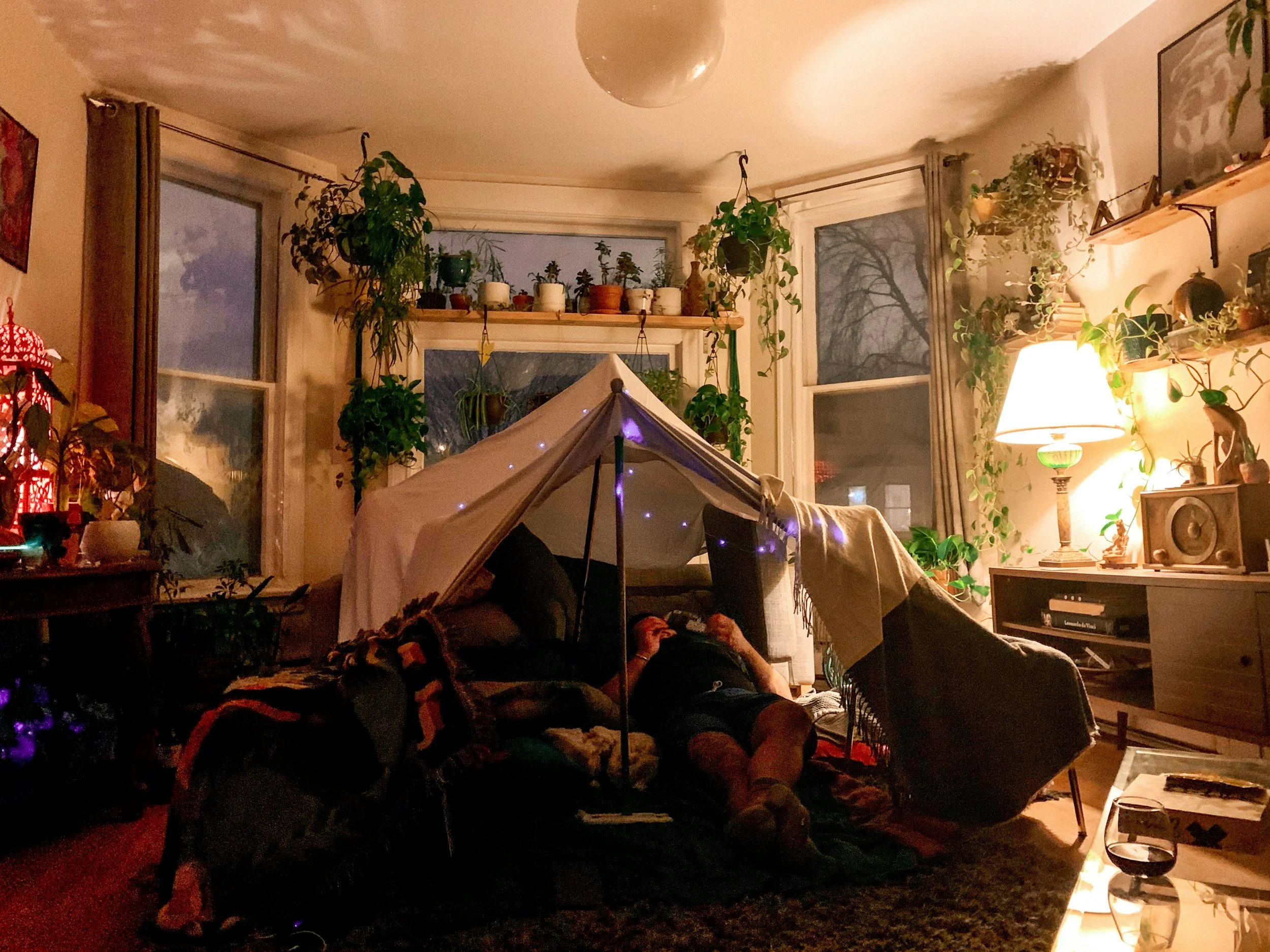
We tend to think of play as “something to do,” when it is actually a vital part of the tapestry that makes us who we are. Play has become a lost art for many adults, especially in a culture where productivity is tied to moral virtue (thanks, capitalism…but we won’t get into that).
The switch we make away from play and into a production-oriented, business mode is subtle and gradual. Recess disappears while grades on tests become ever more important. The pressure to start thinking about what we need to do with our lives rises, despite most of us not having a clue the direction we want to go in. Without realizing it, the sun eventually set on the days of chasing fireflies in the summer evenings and playing make believe with our friends. We realize this disconnect in adulthood which invites a specific kind of nostalgia. I feel it. Many folks who pass through my office have felt it, and you've likely felt it too. It's as though this longing isn't just sentimentality, but rather our brains and bodies trying to remind us of something important that modern adult life has convinced us is less important.
Before I try to convince you differently, let’s start with a working definition of the word “play.”. The National Institute for Play argues that there are a million different ways to try to describe this idea, but that ultimately they reserve the term “play” for anything that meets the following criteria (pulled directly from their website):
Self-chosen and self-directed
Intrinsically motivated (the means are more valued than the ends)
Structured or ordered based on rules in the player’s mind
Imaginative, or possessing a creative aspect
A playful state of mind—where the player is engaged, alert, and focused, but free from stress, judgment, or external consequences.
At least one person reading this will see these bullets and come to the realization: I don’t really play anymore. Most of us have hobbies, but even those often turn into a performance metric or a search for external validation, which takes us away from a “playful” state of mind, which is essentially free from external consequences.
Research on play is interdisciplinary and expansive, but for brevity I will stick to just the realm of neuroscience (my bread and butter). Play is embedded into the neurobiology of all mammals, including human beings. It’s actually one of the main processing systems built into our brains. When we play, we are actively strengthening neural pathways we use to regulate our emotions, think outside the box, and navigate relationships smoothly. Science goes so far as to call play a fundamental motivational drive—meaning our brains need it just like they need sleep or food. In fact, when play is missing or chronically suppressed, our overall wellbeing pays a heavy price. Research shows that a lack of play is linked to things like depression, stunted social development, and a hard time learning or managing emotional distress.
So how do we reignite the old flames of play in adulthood where time and attention come at a premium?
I’d suggest starting small. If your “play” muscles are atrophied, you cannot expect to pick things back up with ease. For many of us who have been conditioned with the cultural and societal values surrounding productivity and perfectionism, jumping headfirst into dedicated play can actually trigger stress rather than alleviate it. Instead, I’d “microdose” play. Here is what I mean:
Lean into tiny, unstructured curiosities throughout your week, like seeing what it would feel like to rearrange a couple items in your room.
Give yourself permission to make a sub-optimal choice simply to see what happens; like picking a chaotic narrative path in a roleplaying game or trying a completely new and weird recipe without caring if it tastes great!
Roll with whatever “whimsy” is calling to you, whether that is an impromptu FaceTime with a distant family member or spending five minutes wandering down an unfamiliar path on your evening walk.
Once you’ve dipped your toe in and are officially back in playful waters, it helps to audit your hobbies and figure out what play style actually resonates with you. While our drive to play is universal, the language we speak it in is deeply personal. Dr. Stuart Brown, a leading pioneer in play research and founder of the National Institute for Play, notes that adults tend to fall into distinct "play personalities":
Some of us are Explorers, driven by the quiet thrill of discovering an unfamiliar physical landscape or a new idea.
Others are Creators, finding a sense of grounding in the messy process of building a world, tossing random ingredients into a pan, or sketching lines into a work of art.
For many, play is Kinesthetic—expressed through the pure, non-competitive joy of moving our bodies, whether that looks like dancing in a kitchen or skating with no destination in mind.
There is no single blueprint for this, but to consider it “true play,” keep in mind those five criteria I mentioned above: it must be self-chosen, fueled entirely by intrinsic motivation where the messy process is the prize, and guided by the internal rules and imagination of your own mind. Most importantly, it requires a playful state of mind completely stripped of judgment, consequences, or the gaze of an audience. When you engage with the world simply because it sparks a flicker of internal delight—wholly unconcerned with an optimized outcome—you are playing. You are giving your tapestry its vital thread, and your nervous system the exact medicine it has been longing for.
This post was written by Zoe Van Kirk, LCMHCA. Grounded in compassion, collaboration, and a deep curiosity about each client's unique story, they provide tailored trauma therapy and counseling services in Charlotte, NC. Discover how she can support you, or book an in-person session at Grey Embraced.